metadata = hawaiian flavor wingstop, how long is chipotle good in the fridge, birthday wishes for teacher male, popeyes sweet heat sauce, kulamisjanler

Exclusive Content:

The Real Benefits of Installing Café Blinds Perth for Your Home

Outdoor living is a huge part of the Australian...

Granite Countertop Design Trends for Modern Kitchens

Granite countertops remain a beloved choice for kitchens, offering...

History and Value of Antique Chess Sets

Antique chess sets offer a glimpse into diverse cultures...
Home Blog Page 36

Why Coconut Is So Healthy For You

0

The “water” that is extracted from the coconut is a nutritious drink that has been renowned for its health benefits for hundreds of years by people living in tropical regions. Each nut contains an astonishing 200 to 1000 milliliters of water, you wouldn’t have thought that something so small could pack in such a nutritious punch with that kind of quantity. The water itself contains a multitude of micronutrients that really boost your immune system. It also contains a plant hormone called cytokinins which have been known to combat the effects of aging on your skin and are popular among the ladies as a result. It is always good to go for the fresh option rather than bottled versions as natural versions as known to reap the most rewards for your health. Let us take a look at some of the main benefits you can enjoy as a result of this wonderful drink.

Rehydrates the Body

This is one of the most comprehensive benefits of this drink. It is one of the best ways to beat a thirst under tropical sunny conditions. The fact that it has an electrolyte composition makes it also one of the best remedies for fluid loss in the body due to sicknesses like diarrhoea not to mention a rich content of carbohydrates which ensures you have a high level of energy at all times. Further studies and research show that this drink is also an effective way to replenish the fluids lost during exercise, so the next time you hit the gym you know what you could drink to retain your body’s hydration.

Lowers Blood Pressure

Blood pressure is a common ailment that millions of people around the world suffer from, luckily coconut water is now known to be an effective way to combat this. Two cups of this nutritious water can help regulate your blood pressure. The level of Potassium found in this drink negates the effect of sodium in the body. Sodium is known as a contributing factor to blood pressure. This is also a very important difference between the bottled variant and the natural variant of the drink, the bottled version is known to be high in sodium content.

Heart Tonic

Cholesterol is one of the worst enemies of your body but of course, there are two different types of cholesterol and these are HDL and LDL. Water from a coconut reduces the LDL content in your body which is of course the harmful type of cholesterol in your body. The more mature the coconut is, the more effective it would be in contributing to lipid metabolism. A good metabolism is what will make sure that all excess lipids are processed in your body without the chance of any unnecessary retention. The icing on the cake would be the fact that this drink would also be rich in antioxidants which enhance blood circulation and remove any plaque you would not want in your arteries. Lower plaque formation means there would be a lower risk of heart-related sicknesses.

FAQ Section:

Is coconut good for humans?

Coconut is a tropical fruit that has been used for thousands of years as a food and medicine. It is one of the most widely grown fruits in the world and has many health benefits.
Coconut is also known as “the wonder fruit” or “the miracle fruit”. It is rich in antioxidants, fiber, vitamins and minerals, and it can even help you lose weight! Coconut contains vitamin B1 (thiamin), vitamin B2 (riboflavin), vitamin B3 (niacin), vitamin C, magnesium, potassium, copper and zinc.

Why are people afraid of coconut?

Coconut is a fruit that is eaten in many parts of the world. Coconut has been a staple food for many people over the years. However, coconut has been associated with diseases like diabetes and cancer.
People are afraid of coconut because it contains high levels of tannins which are known to cause heart disease and other illnesses. The most popular way of avoiding this risk is by eating it only as a dessert or after meals. This makes coconut a very appealing product to people who do not want to think about their health risks by eating it regularly.

Is coconut oil healthy?

We all know that coconut oil is healthy. The question is whether it is a good health product or not.
Coconut oil has a soothing effect on the lips providing instant lip anesthesia. The ingredients present in coconut oil are very good for the skin and hair. It is suitable to use in all kinds of cosmetics, creams, lotions and gels to keep your skin moisturized. This is an excellent alternative to drying up your skin.

Is coconut a good source of energy?

A few years back, coconut was not considered a good source of energy. However, the recent developments in the field of renewable energy have led to a change in opinion. Coconut is now being considered an alternative to fossil fuels and it is being used as fuel for micro-turbines. This article explains how this has happened and how it can be used for other purposes.

The Benefits of Coconut-Based Yoghurt

0

Some people are lactose-intolerant and this is when the traditional type of yoghurt is not an option. Coconut-based yoghurt serves as a healthy alternative and is sought after by those who cannot go for a dairy-based option. In addition to being healthy, it is also packed with various vitamins and minerals. Let us take a look at some of the nutritious components this yoghurt has.

Calories and Fat

Fat contains a high content of energy and this type of yoghurt contains a certain type of saturated fat which is known to boost immunity. This type of saturated fat comes in the form of triglycerides which don’t contribute to the fat formation and is why most people eat coconut-based yoghurts with little to fear. Flavoured variants of coconut-based yoghurt are known to have more fat so it is always better to go for a natural option.

Fibre Is Good

It certainly is and coconut yoghurt is renowned for being good for digestion and reducing the probability of constipation. Greek coconut yoghurts are richer in fibre than most other alternatives and are usually seen as a good remedy when you suffer from digestion problems. Flavoured variants have less fibre and are therefore not the best option.

Coconut
Image Source: Pexels

Sugar and Sodium

Coconut-based yoghurts are low in sugar content and this is why people have nothing to fear in terms of weight gain not to mention reducing the risk of sugar-related sicknesses. This type of yoghurt is also low in sodium which means that people who suffer from pressure have nothing to fear. Sodium is a contributing factor to blood pressure and the fact that these types of yoghurts have very little sodium strengthens its position as one of the healthiest options in the yoghurt market.

Vitamins and Minerals

Calcium is one of the most important sources of nutrition for the bones in your body and of course their maintenance. Maintaining a good level of calcium would be vital for a person so as to not suffer from sicknesses like osteoporosis when you get older.  Coconut-based yoghurts are rich in calcium which is why young children are often encouraged to eat this type of yoghurt.

In addition to calcium, this yoghurt has a value for magnesium which is essential for the smooth functioning of your body muscles. Muscle aches and pains can be avoided with the right intake of magnesium in your body. And last but not least you also find Vitamin B-12 which ensures the production of red blood cells in your body. Red blood cells are an integral part of blood circulation so it is pretty easy to see why this type of vitamin is necessary.

With so many vitamins and minerals available in their composition, yoghurt manufacturing companies are finding it quite easy to sell this type of yoghurt due to its nutritional value. In today’s health-conscious society it is necessary to highlight these health benefits to effectively market a product. The more the benefits, the more this type of yoghurt would be in demand.

FAQ Section:

What is coconut-based yoghurt?

Coconut-based yoghurt is a great alternative to dairy products. It is rich in nutrients and has many health benefits.
Coconut-based yoghurt is becoming more popular in the food industry. It has many advantages over dairy products, such as its low-fat content, low sugar content, and high protein content.

Coconut

Does it taste good?

The main reason why coconut-based yoghurt tastes good is that the coconut oil used in it has a high smoke point. This means that when it is heated to a high temperature, the oil will start to smoke and begin to smell like a strong, fresh tropical smell.

Are there any health benefits of coconut-based yoghurt?

Coconut-based yoghurt is a great alternative to dairy-based yoghurt. It has a lot of health benefits. Coconut and yoghurt are rich sources of vitamins, minerals and fats. They also contain beneficial compounds like calcium, iron and magnesium.

What are the differences between coconut-based yoghurt and regular yoghurt?

Coconut-based yoghurt is made from coconut milk, different from regular yoghurt that is made from cow’s milk.
The main difference between coconut-based yoghurts and regular yoghurts is that the latter contains sugar. Coconut-based yoghurts are sweeter than regular ones and contain more protein, potassium and calcium.

Does coconut-based yoghurt contain lactose or sugar?

Coconut-based yoghurt is a good source of calcium and vitamin B12. However, it contains lactose and sugar.

How to choose the right coconut-based yoghurt for me?

The coconut-based yoghurt is more popular than other types of yoghurt. This is because it has a strong flavour and tastes almost like a dessert. It’s also rich in vitamins and minerals such as potassium, magnesium and calcium. This yoghurt is suitable for people who are lactose intolerant or have celiac disease.

Is coconut-based yoghurt for everyone?

The answer is yes. The yoghurt industry has seen a boom in the last decade. It is one of the fastest growing food markets in India and it is also one of the fastest growing segments in the world. There are many benefits that come with choosing coconut-based products over other nut-based products, especially when you are looking for ingredients to make your own recipes. Coconut milk has a lot of health benefits, which are not present in other nut milks like cashew milk or almond milk, but there is nothing wrong with using them if you want to make healthy yoghurs at home.

What are the reasons why I should use coconut-based yoghurt?

There are many reasons why I should use coconut-based yoghurt. It is not just a tasty snack or a tasty addition to my breakfast. Coconut-based yoghurt is actually good for you and your health because it contains vitamins and minerals that help in the process of digestion.

The Complete Guide to Sleep Well

0

If you are reading this, you probably have a hard time falling asleep at the night. Medical professionals often call this ‘insomnia’. It is the inability to fall asleep even if you want to. Not being able to sleep at the night has many negative effects on the human body. For example, it can make you feel extremely tired the next day and can bring down the energy levels that are used to carry out your day-to-day activities. The inability to sleep also has a negative impact on one’s mental health as it can make a person feel stressed out. In addition, it may also affect one’s ability to make decisions with a clear mind. Therefore, the below guide will give you some tips on how to get past this problem to help sleep better.

Never Go To Bed Hungry

One of the things that will keep you away from your sleep is hunger. A grumbling stomach and gastritis can keep you up all night and therefore it is important to have a good meal before bed. However, it is also important to remember not to eat too much. Eating too much can give you heartburn and can also avoid you from getting good sleep. For example, if you have too many sweets before bed, it will surely give you a sugar rush and boost your adrenaline levels causing insomnia.

Trouble Sleeping
Image Source: Pexels

Make Your Room Comfortable

Another factor that will contribute to a good night’s sleep is a comfortable bedroom. If your bedroom is not neat, clean, and comfortable, you will definitely have trouble falling asleep. Therefore, start by making sure the quality of your bed is good. This means paying attention to your mattress and pillows. If you think your bed doesn’t feel comfy, it is time to consider new options such as a mattress in box Australia. You also need to make sure that your room looks neat and clean in order for your mind to relax.

Avoid Alcohol And Caffeine Before Sleep

As we all know, alcohol and caffeine and two substances that will keep us up all night. Therefore, if you are someone who has trouble falling asleep, you should definitely cut down on these two. If you want to have a coffee, you may have it in the afternoon and not after the evening so that there is time for its effect to go away.

Reduce Your Stress

Stress can interrupt our sleeping patterns. Therefore, you should take the necessary measures to reduce stress throughout the day. For example, talk to a friend about your stress which will help you to feel better or engage in various relaxing techniques. For example, meditation and yoga before sleep have proven to help people sleep better. Also, consider exercising daily which is another ideal way to minimize stress.

Thus, you can worry less about your sleeping problems if you follow the above steps on a daily basis. It will have a positive impact on both your physical and mental health.

FAQ Section:

What is the ideal time for sleeping?

The best time to sleep is when you have an empty stomach and a full mind.

How do we fall asleep?

We fall asleep when we are tired. This is a natural reaction to the demands of daily life, which we need to cope with.

How long is good sleep?

According to the WHO, adults should get at least 7 hours of sleep per night and children 6 hours. If you have any kind of chronic condition or illness that affects your sleeping patterns such as cancer or diabetes, you should increase your sleeping time accordingly.

What are the main causes of sleep problems?

Sleep disorders are not uncommon. They affect millions of people in the world. They can be caused by many different factors such as stress, work overload, lack of sleep and even aging.

What is the difference between sleeping and sleeping well?

Sleep is a fundamental process that helps us to recover from the day’s activities. It is a natural part of life and it should not be neglected. However, sleep is not very easy to achieve, even though it has been proven that we can get some rest during the day. We are used to thinking of sleep as a passive activity, which we do when we are resting from our daily activities. However, sleeping well requires different skills than just resting from our daily activities.
We need to have good posture and keep our body relaxed for at least 30 minutes every day in order to get enough sleep. Even though this sounds simple enough, it is actually quite difficult for many people because they don’t have time for this activity and simply don’t know how to do it properly.

What are the most common sleep disorders?

The most common sleep disorders are insomnia, hypersomnia, sleep apnea and narcolepsy. These disorders can be treated with different medications. All these disorders are either treatable or preventable.

What is the difference between sleep apnea and snoring?

Sleep apnea is a breathing condition where the person stops breathing for a few seconds or minutes. It can be caused by a number of different factors, but the main cause is usually obesity. The person’s voice will change and they will not be able to breathe out of their nose.
Snoring is when a person snores loudly and in an irritating way. It may also occur when someone has sleep apnea, but it can also occur with other breathing disorders like obstructive sleep apnoea (OSA).

What causes sleep apnea?

Sleep apnea is a common sleep disorder that affects millions of people around the world. It is characterized by the inability to breathe during sleep. This can lead to physical and psychological effects such as headaches, fatigue, and even death.
Sleep apnea can be caused by several different factors, but one of the most common causes is a lack of oxygen in the body at night due to heart failure or other diseases such as diabetes or respiratory disorders.

How can I improve my sleeping habits?

Sleep is an essential part of life. It helps us to recover from physical and mental stress, and it is also a major contributor to our overall health. However, when we are not getting enough sleep, many of us feel tired and uninspired.
We all have different sleeping habits and it is important to understand the reasons why we sleep differently from one another. We can use this knowledge to help ourselves improve our sleeping habits.

Can I use natural remedies to improve my sleeping habits?

The sleep cycle is a very complex and delicate process. It takes place in cycles of light and dark, and it involves a lot of different hormones. When we are not sleeping well, it is because there are too many hormones in our system that affect our sleep.
I have seen people who have used natural remedies to improve their sleeping habits. It is not about getting rid of the toxins that cause insomnia, but rather supplementing them with good sleep hygiene practices to get better quality sleep.
The following natural remedies can help you get a better night’s sleep:
Sleep is a vital part of our body’s natural functions. It is important to get enough sleep to keep our body and mind healthy. The following natural remedies can help you get a better night’s sleep: follow the rules:
1. Don’t leave your room at midnight; this is bad for your health
2. “Sleep early, sleep late” – get up earlier to go to bed later, and vice versa
3. Make sure that you have enough sleeping time in a day as well.

Are there any benefits of exercise?

Exercise is a very important part of health and well-being. It is also essential for your productivity. But do you know that exercise can actually help you sleep better?
Exercise helps improve your cognitive abilities, memory, focus, and concentration. It also helps to reduce stress levels, increase energy levels and relieve anxiety. In addition to all this, it improves your mood by increasing the levels of serotonin in the brain – which has been found to be linked with mood improvement as well as reducing depression.

How does sleep depend on a number of factors?

Sleep is a very important human need. It is even more so for our children and teenagers. They need to be able to rest and recharge their batteries at night.
Sleep has a huge impact on the brain, making it less efficient in terms of cognitive processes. Sleep deprivation can cause depression, anxiety, and other mental illnesses as well as lower productivity levels.
The reason why sleep is important is that it helps the body to repair itself after a hard day’s work or after an intense workout.
Sleep also helps the body to adapt to new situations or environments, which means that people who are constantly working in different places will have their bodies adapted to them over time, thus improving their performance in any given situation.

What are the main benefits of sleep?

Sleep is a natural human need. It is an important part of our daily lives and plays a big role in our mental and physical health. The most common sleep disorders are insomnia, restless leg syndrome, shift work disorder, narcolepsy, and sleep apnea.
Sleeping disorders have negative effects on the body, such as obesity, hypertension, and diabetes. They also cause psychological problems such as anxiety and depression. In addition to that, sleeping disorders can affect your job performance negatively because you cannot concentrate well during the day because of being tired after a long day of work or you may not be able to remember what you did yesterday or last week.
You can use sleeping pills to help with these problems but they may not be safe for long-term use.

Is it possible to get a good night’s sleep without exercise?

Sleep is a vital function of our body. It is a very important part of our daily lives and we need to get enough sleep in order to function properly. However, sleep deprivation can be quite dangerous for your health as it can lead to various health issues such as depression, high blood pressure, and diabetes.
To get a good night’s rest, you need to exercise regularly too. Exercise helps in increasing the amount of serotonin in your brain which improves your mood and helps you feel more energetic during the day. When people are mentally tired, they tend to sleep more and often. Exercise during the day helps in increasing your energy levels and mood, so this is a good thing to do too. Exercise even just for 10 minutes every day can reduce your risk of diabetes as it works on improving insulin sensitivity and helps you lose weight if you are already obese.

Criminal Law Trends for Everyday Citizens

0

Staying current on the latest trends in criminal law is no longer just the domain of legal professionals. Every citizen can benefit from an understanding of the issues shaping justice and safety today. In our rapidly evolving world, the legal landscape has a direct impact on how safe we feel in our neighborhoods, the rights we can exercise at the ballot box, and the level of trust we have in foundational institutions like police and the courts. From advances in technology to meaningful reforms and increased citizen engagement, legal changes are not only transforming how the justice system operates—they are also altering how each of us interacts with the law and our communities in daily life. For individual legal guidance or defense in criminal cases, engaging a qualified criminal lawyer is essential for protecting your rights and interests, ensuring that you have reliable support when navigating complex legal matters.

Knowledge of criminal law developments can empower individuals to make informed decisions that affect both themselves and their broader community. By staying abreast of recent developments in criminal law, citizens are better equipped to influence policy through voting or advocacy, contribute to debates that shape local ordinances, and participate more fully in civic life. Whether it’s the rise of artificial intelligence in law enforcement, reforms aimed at providing second chances for nonviolent offenders, or the restoration of voting rights, each trend presents unique challenges and opportunities. Navigating this landscape begins with awareness, empathy, and a willingness to seek out accurate information.

AI in Law Enforcement

Artificial Intelligence (AI) has rapidly become a double-edged sword in law enforcement, transforming centuries-old policing methods while raising new moral and societal concerns. Many police agencies now rely on AI-driven tools for everything from predictive crime modeling—where software identifies likely “hot spots” for offenses—to sophisticated automated surveillance systems that can track faces, vehicles, or suspicious behaviors in real-time. These technologies often improve efficiency and resource allocation, allowing police to intercept potential crimes with greater speed and accuracy than before. However, they raise significant ethical questions—especially concerning privacy, transparency, and the risk of perpetuating systemic bias in policing decisions. For example, AI systems trained on historical data may unintentionally perpetuate racial profiling if not carefully managed. Research from the National Institute of Justice emphasizes the importance of community oversight and robust safeguard measures as AI’s role in law enforcement continues to expand.

Sentencing Reforms

Across North America, there is building momentum toward sentencing reforms that seek to address the longstanding issues of mass incarceration and systemic inequality. Lawmakers are increasingly rolling back mandatory minimum sentences—especially for non-violent crimes—and are shifting the focus of justice from harsh punishment to approaches centered on rehabilitation, education, and successful re-entry into society. Within criminal law, these reforms represent a significant shift in how the system defines justice and accountability. Such changes aim to reduce the chronic overcrowding of jails and prisons, make the legal system more humane, and better support those transitioning back into their communities after serving their sentences. Many of these efforts are motivated by evidence that lengthy, punitive sentences often fail to deter crime or improve public safety. Instead, governments are investing in alternatives to incarceration, such as drug courts, treatment programs, and employment assistance, in an effort to interrupt cycles of re-offending. According to the Brookings Institution, these new approaches are supported by a growing body of research demonstrating that shorter, rehabilitative sentences lead to lower recidivism rates and more positive long-term outcomes for individuals and society, while also addressing persistent racial disparities in the justice system.

Voting Rights Restoration

An increasing number of states and provinces are moving to restore the voting rights of people with past felony convictions, recognizing the role that civic participation plays in reintegration and community safety. Jurisdictions like Minnesota and New Mexico have recently introduced or passed measures that enable citizens on probation or parole to participate fully in elections. This shift represents a powerful statement about the capacity for redemption and the importance of second chances. It also helps to re-integrate formerly incarcerated individuals into the fabric of civic life, which social scientists note is a critical factor in reducing recidivism. Policies that restore voting rights can strengthen democracy by expanding the electorate to reflect community voices and needs more accurately. According to the Pew Trusts, nearly half of U.S. states have taken substantial steps toward restoring voting rights, reflecting a growing recognition of the connection between civic engagement and successful reintegration for people with criminal records.

Community-Based Initiatives

The rise of community-based justice initiatives is transforming the legal landscape from punitive approaches toward more restorative practices. These programs extend beyond the traditional scope of prosecution and punishment by utilizing mediation, victim-offender dialogues, and group support to address the root causes of crime and repair the harm done to victims and communities. By prioritizing healing and accountability, restorative justice initiatives can reduce recidivism rates, lower costs, and deliver outcomes that traditional court processes may not achieve. Community-driven services such as youth diversion programs, neighborhood peace circles, and mental health interventions are proving particularly successful where trust in the traditional system is low. These initiatives foster stronger relationships between the legal system and local residents by promoting tangible support, fostering dialogue, and facilitating lasting restoration for all affected parties.

Citizen Involvement in Public Safety

Everyday citizens have taken on a more visible and influential role in public safety efforts, assuming a responsibility that traditionally rested solely with law enforcement. This involvement may manifest as participation in neighborhood watch programs, community patrols, preparedness training, or lawfully protecting themselves, their families, and neighbors when circumstances demand. Of particular relevance today is the growing focus on responsible gun ownership—a topic that continues to shape both policy and public debate in North America. Responsible firearm use in self-defense situations has been credited with both deterring crime and, at times, leading to tragic misunderstandings or accidents. Balancing individual rights, such as those protected under the Second Amendment in the United States, with the broader need for community safety and well-being remains an ongoing challenge, prompting the evolution of legislation, safety training initiatives, and sustained civic discourse about what truly keeps communities secure.

Impact of Local News on Crime Perception

The way local crime is reported in the media can dramatically influence public perceptions, often exaggerating the prevalence, severity, and risks associated with crime within a community. Many studies have shown that even when crime rates are at historic lows, sensationalistic or repetitive news coverage can create a sense of persistent threat, undermining trust in public safety and, in some cases, fueling unnecessary policy panics. For instance, residents may overestimate the likelihood of victimization or support harsher policing tactics based on media narratives rather than objective statistics. Harvard’s Nieman Lab and similar journalism institutions have found that balanced, data-driven reporting is crucial for informing the public without fueling undue fear. This approach helps communities foster resilience, maintain rational perspectives, and make decisions based on reality rather than sensationalism, enabling more constructive and informed engagement with local policy discussions.

Final Thoughts

Keeping up with criminal law trends empowers everyday citizens to protect their rights better, advocate for positive change, and support safer communities. Whether through understanding new technological innovations, engaging thoughtfully in policy debates, or participating in restorative justice practices, remaining informed is the essential first step toward a more just and fair society. As these wide-ranging trends continue to shape our collective experience with the law, citizens who stay aware are best prepared to influence and support positive evolution in the justice system, for themselves and their communities.

Transform Your Bathroom with Frameless Shower Doors

0

Modern bathrooms are constantly evolving, and one trend leading the charge is the installation of frameless shower doors. These innovative doors deliver more than just a contemporary appearance—they also offer practical benefits that can enhance your daily routine. Homeowners seeking to modernize their space are increasingly choosing frameless shower doors West Palm Beach for their sleek profile and high-performance features. The absence of bulky hardware allows more of your bathroom’s unique touches and decorative accents to shine through, supporting a cohesive, harmonious design scheme.

By eliminating thick metal framing and opting for uninterrupted glass panels, these shower doors make bathrooms feel brighter, more open, and visually serene. Natural light can travel unobstructed throughout the space, which is especially important in smaller, windowless bathrooms where every bit of brightness counts. The result is a space that not only looks larger but also feels more airy and relaxing. They offer a timeless upgrade that effortlessly complements a broad range of interior décor styles, from urban minimalist to classic traditional. This makes them perfect for renovations that balance luxury and functionality, without looking dated in a few years.

Whether you’re updating for style, aiming to simplify cleaning routines, or making your space more accessible, frameless shower doors can deliver both immediate and long-term value to your home. In this guide, we’ll explore their key advantages, essential considerations before installation, and tips for making the right choice for your home.

Benefits of Frameless Shower Doors

1. Modern, Minimalistic Design

Frameless shower doors provide a truly modern look characterized by unobstructed, clean lines and open sightlines. The transparent glass panels allow the full beauty of your bathroom tilework and fixtures to remain visible, creating a visually expansive effect. This makes even smaller bathrooms appear more spacious and elevated, supporting a design aesthetic highly sought after in contemporary homes. The visual impact is immediate; your shower space can now act as a focal point, rather than being visually disconnected from the rest of the room by heavy metal framing. Seamless, minimal edges highlight any investment you’ve made in luxurious tile or custom stonework, turning everyday showers into an indulgent experience.

2. Increased Home Value

Adding frameless shower doors to your bathroom can significantly increase your home’s value. These doors are frequently mentioned in real estate listings as premium features that attract buyers seeking updated, move-in-ready homes. Because they create a spa-like, high-end atmosphere, they can help set your property apart if you decide to sell. According to industry experts, bathroom improvements like frameless glass doors consistently deliver a solid return on investment, especially in competitive housing markets where quality upgrades matter. Potential buyers appreciate the expensive look and feel, seeing these doors as a signal of thoughtful, upscale remodeling. Even if you’re not selling soon, you’ll enjoy years of enjoyment and functionality from this upgrade.

3. Easier Cleaning and Maintenance

Traditional framed doors often accumulate soap scum, grime, and mildew in their grooves, making maintenance a never-ending task. Frameless designs eliminate these problem areas, significantly simplifying the cleaning process and saving homeowners precious time. All it takes is a simple wipe-down or squeegee after showering to keep the glass looking clean and sparkling. Unlike frames, which may require harsh scrubbing or special tools, the smooth glass allows for nearly effortless daily upkeep. The reduction in hardware also means fewer parts are susceptible to rust, corrosion, or breakage over time, extending the longevity of your bathroom installations.

4. Enhanced Durability

Constructed from heavy, tempered glass, frameless shower doors are designed to withstand daily wear and tear. Unlike thinner, framed options, the glass is less prone to cracking or shattering. It is specifically engineered for safety, undergoing a treatment process that increases its strength several times that of ordinary glass. The robust nature of these panels means they’ll hold up beautifully in both busy family bathrooms and serene luxury suites, ensuring a long-lasting addition to your home. Features such as minimal yet sturdy hinges and quality handles further reinforce both durability and ease of use. In the unlikely event of breakage, tempered glass is designed to crumble into small, less harmful pieces rather than sharp shards, providing added safety for all users.

5. Improved Accessibility

One of the standout features of frameless shower doors is their adaptability to barrier-free or low-threshold entries, which is an essential consideration for accessible bathroom design. This means that people with mobility issues—including seniors or those with disabilities—can enjoy safer, easier access to the shower. The seamless entry eliminates trip hazards and can be customized for various needs, making the bathroom environment more inclusive for everyone. It’s also easier to install larger openings for wheelchairs or walkers, and the doors can be made to swing both inwards and outwards for additional convenience. This commitment to inclusive design helps ensure your bathroom can serve your family’s needs for years to come.

Considerations Before Installation

1. Cost Implications

Frameless shower doors are an investment, often priced higher than standard framed models. The use of thicker, high-quality glass and corrosion-resistant hardware adds to both their appeal and overall cost. Installation pricing can also vary based on factors such as glass thickness, door size, and hardware selection, as outlined in detailed cost breakdowns, such as this guide on shower glass door installation costs from This Old House. When budgeting for your bathroom remodel, it’s essential to look beyond the upfront cost and weigh the long-term benefits, including increased home value, reduced maintenance, and a clean, enduring aesthetic. The potential for a custom fit can increase the price, but it ensures the door is tailored precisely to your bathroom’s layout. To make the most of your investment, it’s wise to compare quotes from several reputable providers to find the best balance of design quality and installation expertise.

2. Professional Installation

Due to their weight and the precision required for watertight installation, frameless shower doors should always be installed by trained professionals. A proper fit ensures water stays within the shower area, preventing future issues such as leaks, water damage, or mold growth behind walls and under floors. Even minor installation errors can lead to costly repairs later, underscoring the importance of professional expertise. Look for local experts with a strong reputation for custom installations, and don’t hesitate to ask for references before hiring. Professionals will also be able to advise on the best placement, hinge types, and handle options for your specific needs, resulting in a seamless finish and long-lasting satisfaction.

Conclusion

Frameless shower doors merge elegance, safety, and easy upkeep, giving any bathroom a sophisticated edge. Installing these doors requires thoughtful preparation and investment, but the rewards—both practical and aesthetic—are clear and lasting. With their compelling benefits and modern appeal, frameless shower doors remain a top choice for homeowners wishing to transform their bathrooms into functional works of art. If you’re seeking to boost both your home’s value and your daily living experience, these shower doors represent a smart, stylish upgrade worth considering.

Get Your Dart Board Sorted: A Guide to Types, Prices, and Value

0

G’day, mates! So, you’re thinking about getting a dart board? Brilliant idea. Whether it’s for the classic Kiwi garage setup, a dedicated games room, or just a bit of fun with the whānau, a good dartboard is a source of endless entertainment. But walk into a store or browse online, and you’re hit with a heap of options, brands, and price tags. It’s enough to make your head spin faster than a Robin Hood shot!

Don’t worry, we’ve got your back. This guide will cut through the noise. We’ll break down everything you need to know—from the different types of boards to what you can expect to pay here in New Zealand. Our goal is to help you find the perfect board that offers the best value for your hard-earned dollar, so you can spend less time researching and more time hitting those 180s.

First Things First: Choosing Your Dart Board Type

Not all dartboards are created equal. The type you choose will dramatically affect your playing experience, durability, and overall enjoyment. Let’s get the lowdown on the two main contenders.

Bristle Boards: The Gold Standard for Serious Players

When you picture a professional dartboard, you’re thinking of a bristle board. Traditionally made from sisal fibres (a type of agave plant), these are the boards used in every pub tournament and professional championship worldwide.

  • How they work: The densely packed fibres allow a sharp steel-tip dart to penetrate cleanly. The key magic trick is that the fibres then close up behind the dart, making the board incredibly self-healing and long-lasting.
  • Who it’s for: Anyone serious about darts. If you plan on practising regularly, hosting competitive games, or just want the authentic experience, a bristle board is the only way to go.
  • Dart Type: You must use steel-tip darts.

Electronic Soft-Tip Boards: The Modern Tech Option

Electronic boards are all about flashy features and social fun. They have a plastic face with numerous small holes for the darts to lodge into.

  • How they work: These boards are packed with sensors that automatically score your throws. They feature a multitude of built-in games (301, Cricket, Count Up, etc.), often have voice and sound effects, and can even connect online for play against others.
  • Who it’s for: Families, social players, or those with limited space who need a board that’s safer for kids (using soft-tip darts). They’re fantastic for parties.
  • Dart Type: You must use plastic or soft-tip darts.

Pro Tip: While you can find cheap electronic boards at toy stores, investing in a quality model from a known brand like Gran Board or Dartslive is crucial for reliability and accurate scoring.

How Much Should You Spend on a Dart Board in NZ?

Your budget is the biggest deciding factor. Here’s a rough guide to what your money gets you in the current New Zealand market.

Essential Gear to Go With Your Board

Your board is useless without the right kit! Remember to factor these into your overall setup cost.

  • Darts: Steel-tip or soft-tip, available in various weights (18g-26g is common). It’s best to try a few different weights to see what suits your throw.
  • Surround: A must-have for protecting your walls from stray throws! A good foam surround will save your gib board and your relationship with your flatmates.
  • Lighting: Proper lighting eliminates shadows, making the board easier to see and reducing eye strain. A dedicated dartboard light ring or cabinet with built-in lights is a game-changer.

For a deeper dive on this, check out our guide on how to set up the ultimate darts man cave.

Your 5-Step Checklist to Buying the Right Board

Follow these steps to make a choice you won’t regret.

  1. Decide Your Play Style: Serious practice or social fun? This chooses your path: Bristle (Steel-Tip) or Electronic (Soft-Tip).
  2. Set Your Total Budget: Don’t just budget for the board. Remember darts, a surround, and possibly a light.
  3. Stick to Trusted Brands: For bristle, you can’t go wrong with Winmau or Unicorn. For electronic, look at Gran Board or Dartslive. This is where expertise and trustworthiness come into play – these brands have proven their quality over decades.
  4. Read NZ-Based Reviews: See what other Kiwis are saying. Was shipping fast? How was the customer service? This speaks to the authoritativeness of the retailer.
  5. Buy from a Specialist: While warehouse stores are tempting, buying from a dedicated shop like Darts Online NZ means you get expert advice and access to quality products that will actually last.

Frequently Asked Questions (FAQ)

Q: How long should a good dartboard last?

A: A quality sisal bristle board used in a home setting should easily last 2-5 years with regular rotation. Cheap boards might be ruined in under a year.

Q: Can I use steel-tip darts on an electronic board?

A: Absolutely not. This will severely damage the electronic board’s surface. Always use the correct dart type for your board.

Q: How often should I rotate my bristle dartboard?

A: Regularly! Rotate it a quarter-turn every couple of weeks if you play frequently. This ensures the wear is evenly distributed, especially on the popular 20 segment.

Q: What is the official height and distance for a dartboard?

A: The official height is 1.73m from the floor to the centre of the bullseye. The throwing distance is 2.37m from the face of the board to the oche (throw line). For a complete setup guide, the Darts Regulation Authority has all the details.

Conclusion

Choosing the right dart board doesn’t have to be a tricky game of chance. By understanding the types, knowing what a fair price looks like in NZ, and following our simple checklist, you’re all set to make a brilliant choice. Remember, investing in a quality board from a trusted brand is investing in years of enjoyment. There’s nothing quite like the satisfying thud of a dart hitting a premium sisal board.

Why Buying from a Cue Shop Online Is Easier Than Ever

0

Gone are the days of driving from store to store to find the perfect cue. Whether you’re a seasoned player or just starting out, shopping at a cue shop online like CueStore.co.nz offers unbeatable convenience, variety, and expert service—all from the comfort of your home. In this guide, we’ll explore why buying cues online has become the smartest choice for Kiwi players.

Why Shop for Cues Online?

Online cue shops have revolutionised the way players buy equipment. Here’s why:

  • Massive Selection: Unlike physical stores limited by shelf space, online shops stock hundreds of cues, from budget-friendly options to professional-grade models.
  • Detailed Product Info: High-quality photos, specs, and customer reviews help you make informed decisions.
  • Convenience: Shop anytime, anywhere—no need to travel or wait for store hours.
  • Competitive Prices: Online retailers often offer better deals due to lower overheads.

Example: Finding a Left-Handed Cue

John, a left-handed player in Christchurch, struggled to find a suitable cue locally. After browsing CueStore.co.nz, he found a left-handed model with custom weight options—delivered to his door in two days.

How to Choose the Right Cue Online

Follow these steps to pick the perfect cue:

  1. Determine Your Skill Level: Beginners may prefer a lightweight, affordable cue, while advanced players might prioritise balance and material.
  2. Check the Specs: Look for weight, length, tip size, and material (e.g., maple vs. carbon fibre).
  3. Read Reviews: Genuine feedback from other players can highlight pros and cons.
  4. Compare Prices: Use filters to stay within your budget.
  5. Verify Return Policies: Ensure you can exchange the cue if it doesn’t suit you.

Quick Checklist Before Buying

  • ✅ Weight (18–21 oz is standard)
  • ✅ Tip hardness (soft for control, hard for power)
  • ✅ Warranty coverage
  • ✅ Shipping costs and delivery time

Pros and Cons of Online vs. In-Store Shopping

FactorOnlineIn-StoreSelectionWider rangeLimited stockPricingOften cheaperMay include markupExpert AdviceChat/email supportFace-to-face helpTry Before BuyingNo (check returns)YesConvenience24/7 shoppingTravel required

Real-Life Scenarios: When Online Beats In-Store

Scenario 1: Rural Players

Emma lives in rural Otago, where the nearest cue shop is a 3-hour drive away. Online shopping saves her time and fuel costs while giving her access to premium brands.

Scenario 2: Customisation Needs

Mark wanted a cue with a specific grip and engraving. Local stores couldn’t help, but an online cue shop offered custom-built options with a 3-week turnaround.

FAQ

1. Is it safe to buy cues online?

Yes, if you shop from reputable stores like CueStore.co.nz. Look for SSL encryption, customer reviews, and clear return policies.

2. How do I know the cue will suit me?

Check size/weight specs and use the retailer’s sizing guides. Many shops offer returns if the cue doesn’t feel right.

3. Are online cues more expensive?

Often the opposite—online stores have lower overheads and frequent discounts. Compare prices before buying.

Final Thoughts

Buying from a cue shop online simplifies the process, offering unmatched variety, competitive pricing, and doorstep delivery. Whether you’re after a basic cue or a pro-level upgrade, platforms like CueStore.co.nz make it effortless to find your perfect match.

Structural Benefits of Retaining Walls for Sloped Yards

0

Sloped yards can be a beautiful feature of any property, but they also present unique landscaping and maintenance challenges. Homeowners often struggle with soil erosion, excessive water runoff, and a lack of usable space. Retaining walls Pittsburgh, PA offer a reliable and attractive solution, providing essential structural support while transforming sloped terrain into more functional, aesthetically pleasing outdoor environments. Installing the right retaining wall system can help address these common landscaping obstacles and increase your property’s practicality and appeal from day one.

Whether you want to increase your yard’s usable area or control runoff during Pittsburgh’s heavy downpours, retaining walls perform multiple roles beyond basic landscaping. They are a long-term investment for homeowners seeking to preserve their land, prevent costly damage, and enjoy their outdoor spaces with fewer hassles. As landscaping trends evolve, retaining walls offer timeless value for sloped yards where beauty and durability matter most.

Preventing Soil Erosion

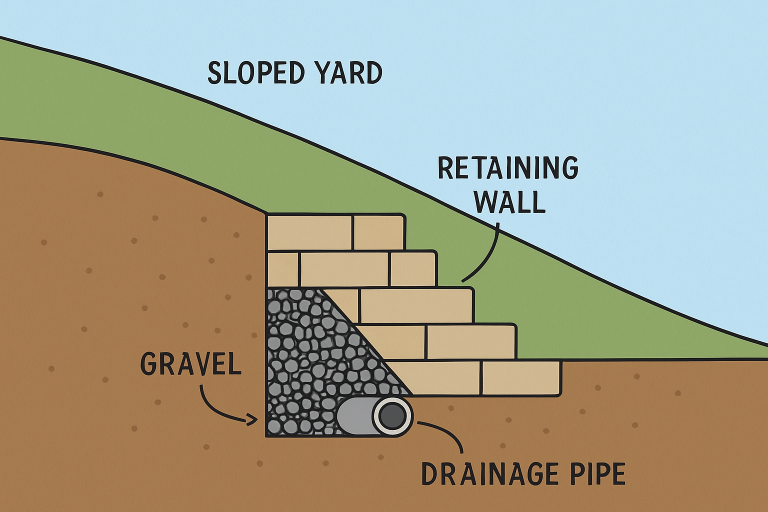
Erosion is often one of the most serious issues in sloped yards. When rainwater flows unchecked down an incline, soil can easily wash away, undermining the stability of your entire landscape. By holding back soil, retaining walls are a physical barrier against erosion, maintaining the yard’s structure and fertility over time. The prevention of soil movement is especially vital during heavy or prolonged rainfall, which can lead to landslides and significant property damage if the land is left unsupported by a sturdy wall.

Retaining walls stabilize the ground and protect nearby structures such as sheds, patios, and even the home foundation. Reducing the risk of sudden earth movement ensures that all parts of your yard and property remain safe, usable, and visually appealing year after year.

Improving Drainage

Beyond stabilizing soil, retaining walls can be engineered with advanced drainage features to help manage water flow more effectively. Techniques such as installing weep holes, gravel backfill, and perforated drainage pipes alleviate water pressure by allowing moisture to escape safely from behind the wall. This design prevents the buildup of hydrostatic pressure, which can otherwise compromise wall stability and lead to premature failure.

Proper drainage also means your landscape is less likely to suffer from soggy spots or standing water, creating a healthier environment for plants and reducing the odds of unsightly water damage. Effective runoff management is especially important in areas with frequent storms or clay-heavy soils that retain moisture, like much of Pennsylvania.

Creating Usable Space

One of the most transformative benefits of retaining walls is their ability to turn previously unusable slopes into flat, accessible spaces. By terracing steep sections of the yard, you can create level platforms ideal for gardens, entertainment areas, fire pits, or children’s play sets. The new, stable surfaces invite landscaping options that would be impossible on an incline, making outdoor living more attractive and functional.

This expansion of usable space directly boosts your property’s value and quality of life. Retaining walls reimagine your sloped yard, making it easier to host gatherings, plant new flower beds, or install outdoor features without the constraint of terrain.

Enhancing Aesthetic Appeal

Retaining walls are highly versatile in visual presentation, allowing homeowners to choose from natural stone, brick, timber, or modern concrete blocks. Customization allows the finished structure to complement the overall style of the house and existing landscaping features, adding established character and depth to the yard. Multiple wall heights or curved lines can add complexity to the landscape while making the most of different elevations.

The visual benefits extend beyond structure alone. Well-designed retaining walls highlight garden beds, frame patios, and incorporate steps or seating areas — creating a cohesive, polished look that enhances curb appeal and makes the yard more inviting to family and guests alike.

Providing Structural Support

In addition to their landscaping beautification roles, retaining walls are critical for providing structural support in sloped environments. They help stabilize large sections of earth and prevent the gradual creep of soil that might otherwise threaten foundations, driveways, walkways, and other permanent installations. This kind of support is particularly valuable in regions that experience heavy rainfall or seismic activity, where uncontained slopes could mean costly repairs or even safety concerns for homeowners.

For homeowners in areas with challenging soil conditions, retaining walls safeguard against long-term settling or shifting, reinforcing the integrity of both the house and its outdoor features.

Increasing Property Value

Home improvement projects that combine functionality and appearance typically add significant value to a property, and retaining walls are no exception. Professionally constructed retaining walls effectively preserve the land’s structure and appearance; they are also highly desirable to future buyers seeking outdoor spaces that require less upkeep and offer more practical uses.

When considering the overall financial investment in your landscape, retaining walls deliver strong returns by reducing maintenance, preventing expensive erosion or water damage, and providing inspirational spaces that stand the test of time. According to This Old House’s guide to retaining walls, these structures are a top choice for boosting backyard usability and curb appeal.

Conclusion

Retaining walls meet many of the critical needs associated with sloped yards. Their multifaceted benefits are hard to overstate, from halting soil erosion and enhancing drainage to expanding usable space and improving the property’s appearance. Whether you’re aiming to prevent troublesome yard runoff or want to maximize your living space, investing in a properly installed retaining wall can significantly increase your property’s function, safety, and value. For those considering hardscape improvements, evaluating the many advantages of retaining walls is a smart first step toward a more beautiful and resilient outdoor living area.

How Mentorship and Counseling Together Shape Healthier Futures

0

In today’s fast-paced world, mental health and emotional well-being are more important than ever. While therapy offers healing and structure, mentorship provides direction and support. But what happens when these two forces combine? A powerful path toward healthier futures. This article explores how the intersection of mentorship and counseling can create a more meaningful and sustainable impact—especially when guided by experts like LPC supervisors and those offering premarital counseling in Fort Worth TX.

The Difference Between Mentorship and Counseling

While both mentorship and counseling offer guidance, they serve distinct purposes.

  • Counseling helps individuals process emotions, trauma, or mental health challenges, usually with a licensed therapist.
  • Mentorship involves an experienced person guiding someone in their personal or professional life, often informally.

How They Complement Each Other

A counselor may help someone understand why they react a certain way, while a mentor may teach them how to respond differently in real-life situations. Here’s how they work together:

  • Emotional Healing from counseling + Life Navigation from mentorship = holistic development.
  • Counseling offers internal insight, while mentorship provides external application.

Real-Life Scenarios Where Both Are Essential

  • Young Adults: A university student facing anxiety benefits from a therapist while a mentor helps with career direction.
  • Newlyweds: A couple attends premarital counseling in Fort Worth, TX to understand conflict resolution, while older married mentors offer wisdom from experience.
  • New Therapists: A licensed counselor-in-training gets guidance from a certified LPC supervisor while also learning the day-to-day professional realities from a seasoned mentor.

Benefits of Combining Mentorship with Counseling

  • Faster Growth: Real-life application of therapeutic lessons.
  • Reduced Relapse: Mentors provide ongoing accountability.
  • Broader Perspective: Emotional and practical advice from two trusted sources.
  • Empowerment: Clients feel more equipped to face challenges independently.

Role of LPC Supervisors in Shaping the Process

Licensed Professional Counselor (LPC) supervisors are certified professionals who guide upcoming therapists. Their mentorship ensures that future counselors:

  • Uphold ethical standards
  • Use evidence-based techniques
  • Understand the nuances of client relationships

By taking on-demand LPC supervisor training, professionals gain the tools needed to both supervise and mentor effectively.

How Premarital Counseling Builds Stronger Marriages

 In a culture where nearly half of marriages end in divorce, premarital counseling is a proactive step toward relationship success.

Some benefits of premarital counseling in Fort Worth, TX include:

  • Learning conflict resolution skills
  • Understanding each other’s values and life goals
  • Setting realistic expectations
  • Exploring family planning and financial management

Many couples also find mentors—older couples or spiritual advisors—to walk with them beyond the counseling sessions.

Tips for Choosing the Right Counselor or Mentor

  • Check Credentials: Make sure counselors are licensed and supervisors are certified.
  • Assess Compatibility: You should feel safe and understood by your counselor or mentor.
  • Look for Experience: Especially in situations like marriage prep or career transitions.
  • Ask for Recommendations: Trusted friends or professionals can point you in the right direction.

Checklist: What to Look for in a Mentor or Counselor

  •  Trustworthy
  •  Experienced in your area of concern
  •  Good communicator
  •  Offers constructive feedback
  •  Provides accountability and encouragement

FAQs

Q: Can a person be both a mentor and a counselor?

A: While possible, it’s typically recommended to keep roles separate for clarity and ethics. A mentor may not have the mental health training that a counselor possesses.

Q: How long should someone be in counseling before seeking mentorship?

A: There’s no strict timeline. You can pursue both simultaneously if you’re emotionally ready and the mentorship adds value.

Q: Is premarital counseling only for religious couples?

A: Not at all. Many secular therapists offer premarital counseling focused on communication, expectations, and compatibility.

Q: How do I know if I need an LPC supervisor or just peer guidance?

A: If you’re pursuing LPC licensure, a certified LPC supervisor is a requirement—not optional. Peer guidance is helpful but not a substitute.

Final Thoughts

 Mentorship and counseling are not mutually exclusive—in fact, together they create a more comprehensive support system for those navigating life’s many challenges. Whether you’re a couple about to tie the knot, a young professional finding your path, or a therapist in training, combining the emotional depth of counseling with the guidance of mentorship creates a well-rounded approach to well-being. Explore licensed services like premarital counseling in Fort Worth, TX and enrich your journey with guidance from a trusted LPC supervisor.

Precision in Practice: How Flat Laser Cutting Shapes Modern Manufacturing

0

Table of Contents

  • What Is Flat Laser Cutting?
  • Advantages of Flat Laser Cutting for Manufacturers
  • Key Industries Utilizing Flat Laser Cutting
  • Process Highlights and Technology
  • Quality and Tolerances in Flat Laser Cutting
  • Material Compatibility and Limitations
  • Flat Laser Cutting Compared to Traditional Fabrication Methods
  • Future Trends and Innovation in Flat Laser Cutting

What Is Flat Laser Cutting?

Flat laser cutting is one of the most widely adopted methods for fabricating precise parts from flat sheet materials. This method uses a high-powered, focused laser beam directed by computer-controlled machinery to cleanly cut through various materials, including metals, plastics, and composites. Unlike mechanical cutting, which relies on physical force, laser cutting provides a contact-free operation, resulting in minimal deformation and incredibly smooth edges. This capability stands out particularly in projects where complex shapes, fine details, or intricate geometries are specified.

Many large and small manufacturers are turning to flat laser cutting for prototyping and full-scale production because it can translate digital designs into tangible components within moments. As a good example of this approach, laser cutting Manitoba helps companies achieve tight tolerances and superior repeatability without sacrificing project timelines. The shift from traditional tooling requirements lowers entry barriers for custom manufacturing, opening the field to greater flexibility, especially for projects requiring short production runs or frequent design updates.

Advantages of Flat Laser Cutting for Manufacturers

The rise in demand for flat laser cutting is closely tied to its efficiency and versatility. Industrial sectors are always looking for methods that improve throughput while keeping overheads in check, and this process delivers on both fronts. Speed is an undeniable advantage—unlike mechanical cutting or stamping, laser systems can rapidly process multiple parts, reducing lead times. Manufacturers can configure laser parameters for each unique job, producing consistent, high-quality outputs regardless of batch size.

  • Speed: Flat laser systems are engineered for rapid production. Automated loading and unloading systems allow for near-continuous operation, rapidly accelerating project delivery times and increasing capacity for just-in-time manufacturing.
  • Precision: The technology can achieve extremely tight tolerances, which reduces the likelihood of errors. This precision can be vital in industries where even a slight deviation can have significant consequences, such as in the aerospace or automotive sectors.
  • Flexibility: Flat laser cutters can seamlessly switch between different designs by simply updating a digital file. There’s no need for custom molds or dies, making them efficient for prototyping and highly customized production runs.
  • Reduced Material Waste: Lasers create significantly less scrap by focusing only on the removed material, which translates into cost savings and reduced environmental impact.
  • Minimal Tool Wear: With no physical contact between the machine and the material, wear and tear are drastically reduced, cutting down on maintenance and ensuring consistent performance.

As detailed reviews of laser cutting in modern fabrication reveal, these benefits translate directly to better profitability, less downtime, and a more agile production process overall.

Key Industries Utilizing Flat Laser Cutting

Flat laser cutting has rapidly expanded its reach across diverse sectors, becoming indispensable in industries that rely on complex parts and demanding quality standards. The automotive industry, for example, leverages flat laser cutting for everything from chassis components to decorative details. Consistent quality and rapid turnaround allow manufacturers to respond quickly to shifting consumer preferences and design upgrades.

  • Automotive: Laser cutting is ideal for manufacturing brackets, reinforcing plates, and intricate trim pieces. Its speed and consistency are essential to automotive innovation cycles.
  • Aerospace: Aircraft and spacecraft components require high precision and lightweight construction. Laser cutting provides the detail and accuracy needed for these demanding environments, supporting safety and performance objectives.
  • Electronics: The miniaturization trend in electronics benefits greatly from laser cutting, which can produce fine, delicate features in conductive and insulating materials alike.
  • Medical Devices: Strict hygiene standards and the need for highly detailed instruments make laser cutting the method of choice for scalpels, clamps, and other medical tools.
  • Architectural Design: Architects and builders appreciate how laser cutting makes intricate facades, custom screens, and creative installations feasible at scale, merging function with artistic expression.

These industries, and many more, are capitalizing on technology that ensures accurate, repeatable, and aesthetically pleasing results—critical factors in today’s competitive markets.

Process Highlights and Technology

At the core of flat laser cutting is a blend of sophisticated hardware and innovative software. Fiber and CO2 lasers dominate this space, each optimized for specific materials and thicknesses. Machines come equipped with high-resolution motion control, ensuring the laser head moves precisely down to fractions of a millimeter. Automation features such as automatic material feeders streamline operations and reduce labor requirements, letting companies handle large orders without compromising quality.

Recent developments in automation and AI are propelling the industry forward. Sensors can now provide live feedback on cut quality or material changes, while predictive maintenance reduces downtime by addressing wear and tear before it disrupts production. Cloud-based analytics and remote monitoring offer new levels of control, enabling companies to optimize usage patterns, monitor output trends, and adopt a more proactive approach to equipment maintenance. According to industry analyses on AI-integrated laser cutting, these enhancements translate to substantial gains in production efficiency and reduced labor costs.

Quality and Tolerances in Flat Laser Cutting

Consistent, high-quality output is a central promise of flat laser cutting. Advanced lasers enable tight tolerances—often as precise as ±0.003 inches—without manual intervention. Meeting these tolerances is essential for industries where reliability and performance are non-negotiable. Precise edges eliminate much of the need for grinding, deburring, or straightening, cutting down on both cost and time in secondary processes.

When manufacturers are tasked with producing thousands of identical parts, deviation from design can quickly derail a project. Laser cutting’s digital nature ensures each part matches the original CAD model, enabling seamless fit and function when parts reach assembly. This boosts confidence in production runs and minimizes rework and product recalls.

Material Compatibility and Limitations

The flexibility of flat laser cutting means it works with a wide array of materials. Ferrous and non-ferrous metals—like steel, stainless, aluminum, brass, and copper—are routinely processed with minimal fuss. Beyond metals, synthetic sheets and laminated materials can be handled, expanding possibilities for specialized applications in packaging or signage.

Yet, it’s essential to know the limitations. Highly reflective materials, such as pure copper and certain aluminum alloys, can scatter the laser beam, reducing efficiency and possibly harming equipment. Thicker plates, especially over 1 inch, might require specialized, higher-powered lasers that not all shops possess. Safety measures like proper extraction systems are necessary, particularly when cutting materials that emit hazardous fumes.

  • Best outcomes are achieved with properly prepared CAD design files.
  • Positive results depend on choosing the correct machine parameters for each material.
  • Operators must be trained to recognize materials that could produce health or fire hazards during cutting.

With thoughtful preparation and the right equipment, most of these hurdles are manageable, letting manufacturers fully exploit the versatility of laser cutting.

Flat Laser Cutting Compared to Traditional Fabrication Methods

Manufacturers have long relied on stamping, sawing, and water jet cutting methods. While each process has merits, flat laser cutting stands out in several ways. The process is inherently digital, meaning new projects require nothing more than a CAD file—there’s no need for expensive and time-consuming tool changes. This is especially beneficial for custom or limited-production runs, where traditional tooling would be cost-prohibitive.

  • Speed and Flexibility: Prototypes can be created, evaluated, and refined with minimal delay, shrinking the timeline from concept to finished part.
  • Non-contact Cutting: The laser beam slices without touching the material, preventing physical stress, heat distortion, and tool marks that can occur with saws or mills.
  • Cleaner Edges: Unless materials are excessively thick or stiff, laser cutting generally leaves edges free of burrs, reducing the need for post-processing and allowing faster assembly.
  • Effortless Digital Integration: Integration with modern CAD, CAM, and ERP systems streamlines scheduling, inventory, and traceability, which is critical for modern, data-driven factories.

Flat laser cutting enables companies to respond quickly to evolving customer demands, accelerates the path from prototype to market, and ensures superior, repeatable results.

Future Trends and Innovation in Flat Laser Cutting

As the manufacturing sector shifts toward greater automation and sustainability, flat laser cutting technology is evolving quickly. Digital connectivity between factory machines promises more flexible and responsive manufacturing environments, while AI-driven software makes laser cutters smarter, capable of optimizing cuts on the fly, predicting equipment maintenance, and reducing material waste. Energy-efficient laser sources, such as next-generation fiber and green lasers, are being introduced to lessen environmental impact and lower operating costs.

The emphasis on combining performance with sustainability will only grow in the coming years. Cloud-based control and real-time analytics are helping manufacturers maximize machine uptime and make data-backed decisions. As customers demand even higher customization and faster turnarounds, these trends will empower companies to deliver with agility and confidence, positioning flat laser cutting as a key player in the factories of the future.