

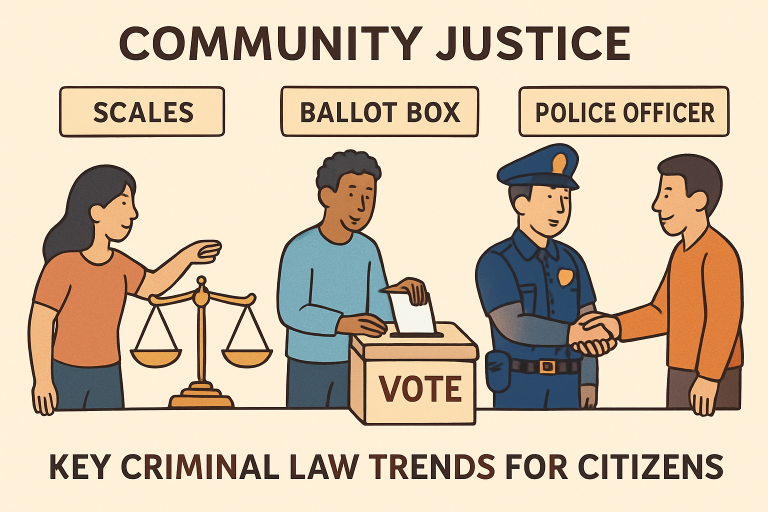
Staying current on the latest trends in criminal law is no longer just the domain of legal professionals. Every citizen can benefit from an understanding of the issues shaping justice and safety today. In our rapidly evolving world, the legal landscape has a direct impact on how safe we feel in our neighborhoods, the rights we can exercise at the ballot box, and the level of trust we have in foundational institutions like police and the courts. From advances in technology to meaningful reforms and increased citizen engagement, legal changes are not only transforming how the justice system operates—they are also altering how each of us interacts with the law and our communities in daily life. For individual legal guidance or defense in criminal cases, engaging a qualified criminal lawyer is essential for protecting your rights and interests, ensuring that you have reliable support when navigating complex legal matters.
Knowledge of criminal law developments can empower individuals to make informed decisions that affect both themselves and their broader community. By staying abreast of recent developments in criminal law, citizens are better equipped to influence policy through voting or advocacy, contribute to debates that shape local ordinances, and participate more fully in civic life. Whether it’s the rise of artificial intelligence in law enforcement, reforms aimed at providing second chances for nonviolent offenders, or the restoration of voting rights, each trend presents unique challenges and opportunities. Navigating this landscape begins with awareness, empathy, and a willingness to seek out accurate information.
AI in Law Enforcement
Artificial Intelligence (AI) has rapidly become a double-edged sword in law enforcement, transforming centuries-old policing methods while raising new moral and societal concerns. Many police agencies now rely on AI-driven tools for everything from predictive crime modeling—where software identifies likely “hot spots” for offenses—to sophisticated automated surveillance systems that can track faces, vehicles, or suspicious behaviors in real-time. These technologies often improve efficiency and resource allocation, allowing police to intercept potential crimes with greater speed and accuracy than before. However, they raise significant ethical questions—especially concerning privacy, transparency, and the risk of perpetuating systemic bias in policing decisions. For example, AI systems trained on historical data may unintentionally perpetuate racial profiling if not carefully managed. Research from the National Institute of Justice emphasizes the importance of community oversight and robust safeguard measures as AI’s role in law enforcement continues to expand.
Sentencing Reforms
Across North America, there is building momentum toward sentencing reforms that seek to address the longstanding issues of mass incarceration and systemic inequality. Lawmakers are increasingly rolling back mandatory minimum sentences—especially for non-violent crimes—and are shifting the focus of justice from harsh punishment to approaches centered on rehabilitation, education, and successful re-entry into society. Within criminal law, these reforms represent a significant shift in how the system defines justice and accountability. Such changes aim to reduce the chronic overcrowding of jails and prisons, make the legal system more humane, and better support those transitioning back into their communities after serving their sentences. Many of these efforts are motivated by evidence that lengthy, punitive sentences often fail to deter crime or improve public safety. Instead, governments are investing in alternatives to incarceration, such as drug courts, treatment programs, and employment assistance, in an effort to interrupt cycles of re-offending. According to the Brookings Institution, these new approaches are supported by a growing body of research demonstrating that shorter, rehabilitative sentences lead to lower recidivism rates and more positive long-term outcomes for individuals and society, while also addressing persistent racial disparities in the justice system.
Voting Rights Restoration
An increasing number of states and provinces are moving to restore the voting rights of people with past felony convictions, recognizing the role that civic participation plays in reintegration and community safety. Jurisdictions like Minnesota and New Mexico have recently introduced or passed measures that enable citizens on probation or parole to participate fully in elections. This shift represents a powerful statement about the capacity for redemption and the importance of second chances. It also helps to re-integrate formerly incarcerated individuals into the fabric of civic life, which social scientists note is a critical factor in reducing recidivism. Policies that restore voting rights can strengthen democracy by expanding the electorate to reflect community voices and needs more accurately. According to the Pew Trusts, nearly half of U.S. states have taken substantial steps toward restoring voting rights, reflecting a growing recognition of the connection between civic engagement and successful reintegration for people with criminal records.
Community-Based Initiatives
The rise of community-based justice initiatives is transforming the legal landscape from punitive approaches toward more restorative practices. These programs extend beyond the traditional scope of prosecution and punishment by utilizing mediation, victim-offender dialogues, and group support to address the root causes of crime and repair the harm done to victims and communities. By prioritizing healing and accountability, restorative justice initiatives can reduce recidivism rates, lower costs, and deliver outcomes that traditional court processes may not achieve. Community-driven services such as youth diversion programs, neighborhood peace circles, and mental health interventions are proving particularly successful where trust in the traditional system is low. These initiatives foster stronger relationships between the legal system and local residents by promoting tangible support, fostering dialogue, and facilitating lasting restoration for all affected parties.
Citizen Involvement in Public Safety
Everyday citizens have taken on a more visible and influential role in public safety efforts, assuming a responsibility that traditionally rested solely with law enforcement. This involvement may manifest as participation in neighborhood watch programs, community patrols, preparedness training, or lawfully protecting themselves, their families, and neighbors when circumstances demand. Of particular relevance today is the growing focus on responsible gun ownership—a topic that continues to shape both policy and public debate in North America. Responsible firearm use in self-defense situations has been credited with both deterring crime and, at times, leading to tragic misunderstandings or accidents. Balancing individual rights, such as those protected under the Second Amendment in the United States, with the broader need for community safety and well-being remains an ongoing challenge, prompting the evolution of legislation, safety training initiatives, and sustained civic discourse about what truly keeps communities secure.
Impact of Local News on Crime Perception
The way local crime is reported in the media can dramatically influence public perceptions, often exaggerating the prevalence, severity, and risks associated with crime within a community. Many studies have shown that even when crime rates are at historic lows, sensationalistic or repetitive news coverage can create a sense of persistent threat, undermining trust in public safety and, in some cases, fueling unnecessary policy panics. For instance, residents may overestimate the likelihood of victimization or support harsher policing tactics based on media narratives rather than objective statistics. Harvard’s Nieman Lab and similar journalism institutions have found that balanced, data-driven reporting is crucial for informing the public without fueling undue fear. This approach helps communities foster resilience, maintain rational perspectives, and make decisions based on reality rather than sensationalism, enabling more constructive and informed engagement with local policy discussions.
Final Thoughts
Keeping up with criminal law trends empowers everyday citizens to protect their rights better, advocate for positive change, and support safer communities. Whether through understanding new technological innovations, engaging thoughtfully in policy debates, or participating in restorative justice practices, remaining informed is the essential first step toward a more just and fair society. As these wide-ranging trends continue to shape our collective experience with the law, citizens who stay aware are best prepared to influence and support positive evolution in the justice system, for themselves and their communities.

